Skincare • Barrier Health • Ingredient Guide
Ceramides vs. Squalane vs. Fatty Acids: Finding Your Lipid Match
Affiliate Disclosure: This post contains affiliate links. If you make a purchase through these links, we may earn a small commission at no additional cost to you. As an Amazon Associate, we earn from qualifying purchases. We only recommend products we believe may provide value to our readers. Read our full Affiliate Disclosure here.
When your face feels dry and stripped, the instinctive reaction is to pile on more hydrating essences. Yet dermatologists consistently point out that water alone cannot repair a leaking moisture barrier; without the right lipids to seal cellular gaps, applied hydration simply evaporates into the air.
The challenge lies in choosing the right type of lipid for your skin profile. While Ceramides, Squalane, and Fatty Acids all protect against moisture loss, they fulfill fundamentally different biological roles. If your barrier is experiencing active redness alongside flaking, layering panthenol and centella soothing formulas under your lipid moisturizer helps calm cutaneous inflammation quickly.
The Bottom Line
Key Takeaway: Ceramides rebuild the physical mortar between skin cells (best for stinging, damaged barriers); Squalane provides weightless, non-comedogenic surface lubrication (best for oily or acne-prone skin); and Fatty Acids nourish deep suppleness and support the skin’s acidic pH (best for chronic dryness).
In This Feature
The Lipid Trio: Why Your Barrier Requires Fat
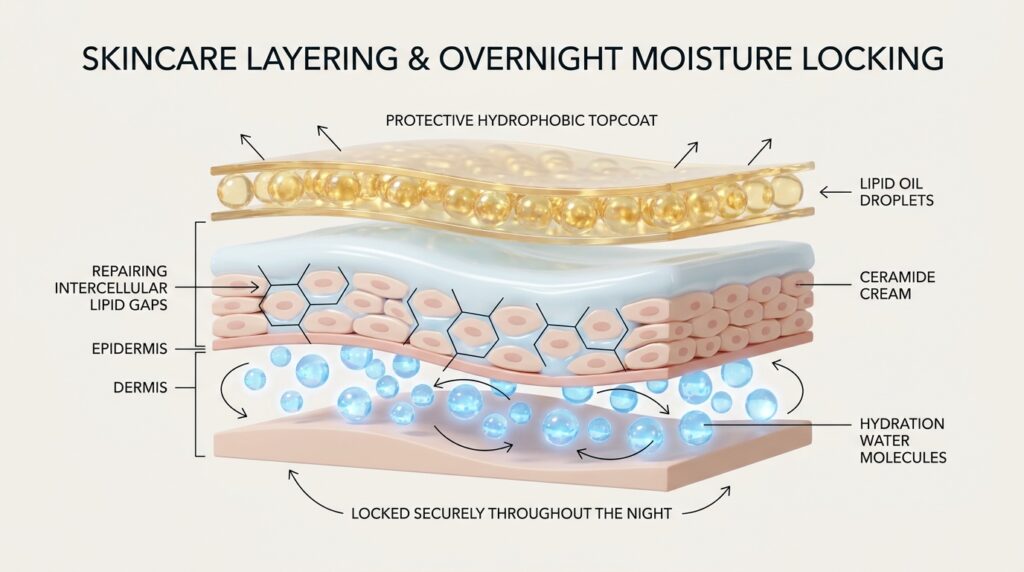
As we detailed in our foundational skin barrier guide, your stratum corneum relies on a precise lipid blend of approximately 50% ceramides, 25% cholesterol, and 15% free fatty acids to act as a cohesive, waterproof seal. While these fats work in unison to prevent water from evaporating into dry air, they fulfill fundamentally different biological roles.
| Lipid Class | Texture & Weight | Primary Biological Role | Best For |
|---|---|---|---|
| Ceramides | Medium to rich cream | Rebuilding intercellular lamellar sheets and blocking irritants | Stinging, sensitized, peeling, or over-exfoliated skin |
| Squalane | Weightless, silky fluid | Mimicking natural surface sebum without clogging pores | Oily, combination, and acne-prone skin needing light sealing |
| Free Fatty Acids | Rich emollient oil | Nourishing deep suppleness and maintaining acidic pH | Chronically dry, mature, and weather-parched complexions |
Ceramides: The Structural Mortar
Ceramides are waxy sphingolipids that physically constitute roughly half of your skin’s intercellular lipid weight.[3] When your barrier is damaged by strong retinoids, chemical peels, or harsh cleansers, ceramides are the specific lipids that have been washed away.
Applying bio-identical ceramides (such as Ceramide NP, AP, and EOP) directly integrates into the depleted spaces between cells. Clinical trials confirm that combining ceramides with cholesterol and fatty acids accelerates barrier repair significantly faster than applying any single lipid alone.
OUR EDIT
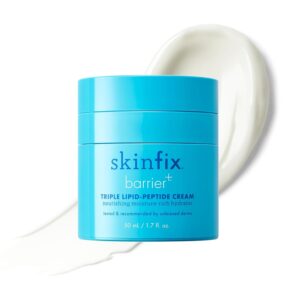
Skinfix Barrier+ Triple Lipid-Peptide Cream
Formulated with a patented active lipid complex that delivers a clinical ratio of bio-compatible ceramides, plant sterols, and free fatty acids. It restores suppleness and stops stinging on contact without synthetic fragrances or heavy pore-clogging waxes.
Budget Alternative: For an accessible drugstore alternative, consider CeraVe Moisturizing Cream with 3 essential ceramides.
Squalane: The Weightless Sebum Mimic
Human sebum naturally contains roughly 12% squalene, a lipid that softens skin and prevents surface moisture evaporation. However, natural squalene oxidizes quickly, which can trigger comedones and clogged pores.[4]
Squalane is the hydrogenated, stable version of this lipid. Derived sustainably from sugarcane or olives, it is completely non-comedogenic and bio-compatible with human skin. Because squalane feels weightless and absorbs instantly, it is the ideal sealing oil for oily, combination, and acne-prone skin types that break out from heavier plant butters.
OUR EDIT
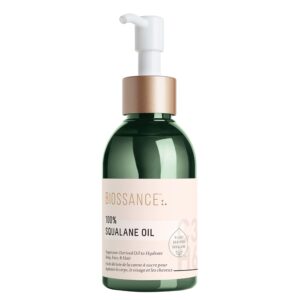
Biossance 100% Squalane Oil
A weightless, sugarcane-derived pure squalane oil that instantly locks in hydration without greasy residue. It softens rough texture, calms surface redness, and can be used on sensitive faces, under-eyes, and dry cuticles effortlessly.
Free Fatty Acids: The Acid Mantle Protectors
Free Fatty Acids—such as linoleic acid (omega-6) and oleic acid (omega-9)—play an essential dual role in skin physiology. They work alongside ceramides to create flexible lamellar sheets, and their presence keeps the skin’s acid mantle at a healthy acidic pH between 4.7 and 5.5.[2]
Acne-prone skin is frequently deficient in linoleic acid, leading to thick, sticky sebum that easily clogs pores. Incorporating lightweight, high-linoleic botanical oils (like rosehip, hempseed, or evening primrose) helps balance natural sebum flow while deeply soothing irritation.
A Quick Self-Check
Finding Your Exact Lipid Match
- If your skin stings, burns, or flakes: Choose a multi-ceramide cream containing cholesterol to physically reconstruct intercellular mortar.
- If your skin feels tight yet looks shiny or breaks out: Choose pure squalane oil pressed gently over lightweight water serums.
- If your skin feels chronically tight, dull, and leathery: Combine a ceramide barrier cream with 2 drops of a high-linoleic fatty acid oil at night.
Frequently Asked Questions
Can I mix a drop of squalane oil directly into my ceramide cream?
Yes. Mixing one or two drops of pure squalane oil into a dime-sized amount of ceramide moisturizer in your palms creates an extra-nourishing emulsion that boosts emollience without adding heavy waxes.
What is the difference between squalene and squalane?
Squalene (with an “e”) is the natural unsaturated lipid produced by our sebaceous glands, but it spoils and oxidizes quickly when exposed to air. Squalane (with an “a”) is hydrogenated to make it completely shelf-stable, non-comedogenic, and resistant to oxidation.
Can oily skin use ceramide creams without breaking out?
Yes, provided the formula is oil-free and non-comedogenic. Oily skin often lacks adequate intercellular ceramides despite producing excess surface sebum; applying a lightweight ceramide gel-cream restores barrier balance and reduces compensatory oiliness.
Medical & Wellness Disclaimer: The information provided on Hinubix is for general educational and informational purposes only and does not constitute medical, psychological, or dermatological advice, diagnosis, or treatment. If you are navigating persistent sleep issues, chronic stress, or unexplained health or skin concerns, please consult a qualified healthcare professional or board-certified specialist for personalized guidance.”
A Note From Nubix ☁️
“You don’t have to figure everything out all at once. Just one gentle step, one slow breath, and a little extra kindness to yourself.”
Medical References
This article was developed and fact-checked based on peer-reviewed dermatological research from the following clinical sources:
- The Journal of Clinical and Aesthetic Dermatology. Del Rosso, J. Q., & Levin, J. (2011). “The clinical relevance of maintaining the functional integrity of the stratum corneum in both healthy and disease-affected skin.” Available at PubMed Central ↩
- Journal of Investigative Dermatology. Elias, P. M. (1983). “Epidermal lipids, barrier function, and desquamation.” Available at PubMed ↩
- Dermatologic Therapy. Rawlings, A. V., & Harding, C. R. (2004). “Moisturization and skin barrier function.” Available at PubMed ↩
- Indian Journal of Dermatology. Sethi, A., Kaur, T., Malhotra, S. K., & Gambhir, M. L. (2016). “Moisturizers: The slippery road.” Available at PubMed Central ↩