Skincare • Barrier Repair • Recovery Guide
5 Simple Steps to Repair Your Damaged Skin Barrier (And What to Avoid)
Affiliate Disclosure: This post contains affiliate links. If you make a purchase through these links, we may earn a small commission at no additional cost to you. As an Amazon Associate, we earn from qualifying purchases. We only recommend products we believe may provide value to our readers. Read our full Affiliate Disclosure here.
There is a specific, quiet distress that occurs when your skin suddenly rebels against your everyday skincare products. A trusted moisturizer begins to burn on contact, dry red patches linger around your mouth, and your cheeks feel constantly tight and raw.[1]
At Hinubix, we believe barrier recovery is an act of gentle subtraction. When the stratum corneum is stripped of its vital intercellular lipids, trying to treat dark spots or texture will only worsen the inflammation. Transitioning into a temporary simple daily skincare routine focused entirely on physiological lipid replenishment gives your barrier the quiet environment it needs to heal.
The Bottom Line
Key Takeaway: To repair a compromised skin barrier, immediately pause all exfoliating acids, retinoids, and strong vitamin C. Follow five minimalist steps: pause actives, cleanse with a non-stripping milk, replenish bio-identical lipids, seal with a targeted occlusive, and protect daily with physical mineral SPF.
In This Feature
The 5-Step Barrier Repair Plan
Dermatologists emphasize that rebuilding damaged skin is not about buying more products, but about supplying the exact physiological lipids your stratum corneum has lost.[2] Here is the restorative five-step sequence recommended during acute sensitivity.
Step 1: Put All Active Ingredients on Pause
The very first intervention is immediate cessation. Set aside all direct exfoliating acids (glycolic, lactic, salicylic), prescription and OTC retinoids, pure L-ascorbic acid, and physical scrubs for at least two to four weeks. Continuing active treatments on a compromised lipid matrix keeps sensory nerve endings exposed and prolongs inflammatory flushing.[1]
Step 2: Cleanse with a Non-Stripping Cleansing Lotion
Foaming face washes with strong anionic surfactants dissolve the delicate intercellular mortar holding your skin cells together. In the morning, rinse simply with lukewarm water; in the evening, use a fragrance-free, pH-balanced cleansing milk that lifts away impurities without creating friction or tight post-wash dryness.
OUR EDIT
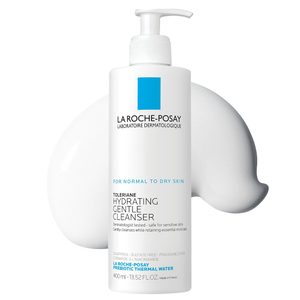
La Roche-Posay Toleriane Hydrating Gentle Cleanser
A gentle, wipe-off or rinse-off fluid enriched with thermal spring water and hydrating glycerin. It preserves the stratum corneum’s natural pH and cleanses sensitized skin with zero friction or tight stinging.
Step 3: Replenish Bio-Identical Barrier Lipids
Hydrating with water-based serums alone is insufficient on cracked skin; water quickly evaporates into dry air unless trapped by physiological lipids. Clinical dermatology studies in Dermatologic Therapy demonstrate that replenishing the natural 3:1:1 ratio of Ceramides, Cholesterol, and Free Fatty Acids directly downregulates trans-epidermal water loss and rebuilds barrier integrity.[3]
OUR EDIT
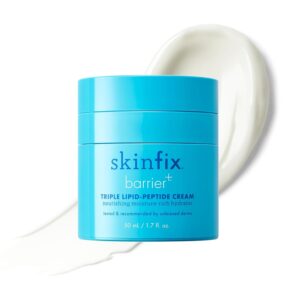
Skinfix Barrier+ Triple Lipid-Peptide Cream
A rich restorative cream featuring active, skin-similar ceramides, plant sterols, and free fatty acids. It absorbs comfortably into damaged stratum corneum, restoring suppleness without heaviness or synthetic fragrance.
Budget Alternative: For an accessible drugstore alternative, consider CeraVe Moisturizing Cream with 3 essential ceramides.
Step 4: Seal Raw Areas with Targeted Micro-Slugging
For areas experiencing acute peeling or stinging (such as around the nostrils and cheekbones), applying a thin layer of a non-comedogenic petrolatum ointment over your lipid cream creates an artificial protective shield. Learning how to slug without clogging pores allows you to lock in moisture overnight while preventing pore congestion.
OUR EDIT
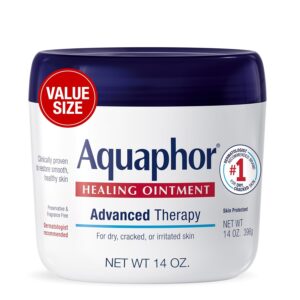
Aquaphor Healing Ointment Skin Protectant
Powered by 41% petrolatum, panthenol (provitamin B5), and glycerin to deeply soothe and restore compromised skin. It creates a breathable, semi-occlusive protective barrier over micro-cracks, sealing in vital moisture and accelerating overnight barrier recovery.
Step 5: Shield with Pure Mineral Sunscreen
UV radiation generates free radicals that degrade structural keratin and lipid bonds in the stratum corneum.[4] While chemical filters absorb UV rays by converting them into heat (which can feel uncomfortably warm on compromised skin), pure Zinc Oxide mineral filters sit passively on the surface, deflecting light with zero chemical sting.
OUR EDIT
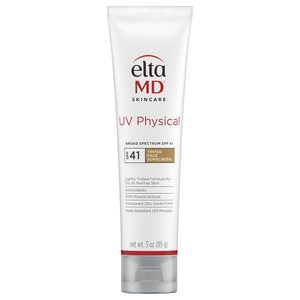
EltaMD UV Physical Broad-Spectrum SPF 41
A gentle, lightly tinted physical sunscreen utilizing zinc oxide and titanium dioxide. Oil-free and fragrance-free, it provides soothing daytime protection that never stings sensitized or post-treatment skin.
What to Strictly Avoid While Healing
When recovering from acute sensitivity, what you leave off your skin is just as critical as what you apply. Steer clear of these four common irritants until your barrier is completely silent:
- Steaming hot water: High water temperatures dissolve surface sebum and accelerate lipid depletion. Always wash with lukewarm or room-temperature water.
- Physical friction and facial cleansing brushes: Scrubbing pads, washcloths, and exfoliating brushes create mechanical tears in fragile corneocytes.
- Fragrances and essential oils: Even natural plant oils (such as lavender, eucalyptus, and citrus) contain volatile aromatic compounds that trigger contact dermatitis on broken skin.
- Layering multiple watery toners without lipids: Drenching skin in water without sufficient emollient sealing can paradoxically increase dehydration through surface evaporation.
A Quick Self-Check
Tracking Your Barrier Recovery Milestones
- Days 1–3 (Acute Relief): Stinging upon applying moisturizer begins to subside; heat and burning sensations decrease.
- Days 7–14 (Texture Softening): Peeling and sandpapery dry patches smooth out as intercellular lipid mortar forms between cells.
- Days 21–28 (Full Cellular Renewal): Skin feels comfortable throughout the day without tightness; moisture retention returns to baseline.
Frequently Asked Questions
Can I wear makeup while repairing my skin barrier?
It is best to minimize heavy foundations during the first week of acute barrier distress. If you must wear makeup, choose a mineral-based formula and remove it gently using a cleansing lotion rather than aggressive micellar waters or makeup-remover wipes.
Will slugging with a healing ointment cause breakouts?
High-grade petrolatum molecules are too large to enter or clog pores. However, because petrolatum is an intense occlusive, it traps whatever is underneath it. Never slug over active acids or retinoids; apply it exclusively over clean skin and a gentle lipid moisturizer.
When is it safe to reintroduce vitamin C or retinol?
Wait until your skin has been completely free of stinging, redness, and flaking for at least two consecutive weeks. When reintroducing actives, start with a low concentration just once or twice weekly, buffering with moisturizer first.
Medical & Wellness Disclaimer: The information provided on Hinubix is for general educational and informational purposes only and does not constitute medical, psychological, or dermatological advice, diagnosis, or treatment. If you are navigating persistent sleep issues, chronic stress, or unexplained health or skin concerns, please consult a qualified healthcare professional or board-certified specialist for personalized guidance.”
A Note From Nubix ☁️
“Take a slow, deep breath and unclench your jaw. The world can wait for a little while—tonight is just for you.”
Medical References
This article was developed and fact-checked based on peer-reviewed dermatological research from the following clinical sources:
- The Journal of Clinical and Aesthetic Dermatology. Del Rosso, J. Q., & Levin, J. (2011). “The clinical relevance of maintaining the functional integrity of the stratum corneum in both healthy and disease-affected skin.” Available at PubMed Central ↩
- Journal of Investigative Dermatology. Elias, P. M. (1983). “Epidermal lipids, barrier function, and desquamation.” Available at PubMed ↩
- Dermatologic Therapy. Rawlings, A. V., & Harding, C. R. (2004). “Moisturization and skin barrier function.” Available at PubMed ↩
- Photodermatology, Photoimmunology & Photomedicine. Krutmann, J., et al. (2017). “Daily photoprotection to prevent photoaging.” Available at PubMed ↩