Skincare • Barrier Recovery • Emergency Guide
The 72-Hour Reset: How to Heal an Over-Exfoliated Skin Barrier
Affiliate Disclosure: This post contains affiliate links. If you make a purchase through these links, we may earn a small commission at no additional cost to you. As an Amazon Associate, we earn from qualifying purchases. We only recommend products we believe may provide value to our readers. Read our full Affiliate Disclosure here.
You layered a glycolic acid toner over a retinol cream, or scrubbed a bit too enthusiastically before an important event. Now your face is flushed, hot to the touch, and even splashing plain water causes a sharp, burning sting across your cheeks.
At Hinubix, we believe emergency barrier care is about stopping the damage in its tracks. For long-term structural recovery beyond the initial reset, following our 5 simple steps to repair your damaged skin barrier gives your stratum corneum the exact lipid ratio it needs to rebuild.
The Bottom Line
Key Takeaway: The 72-hour reset halts acute inflammation through immediate product subtraction. During the first 72 hours, eliminate all active exfoliants, rinse only with lukewarm water, and apply a Panthenol (5%) and Madecassoside balm to seal raw micro-fissures and insulate exposed nerve fibers.
In This Feature
What Happens Beneath the Surface When Skin Is Over-Exfoliated
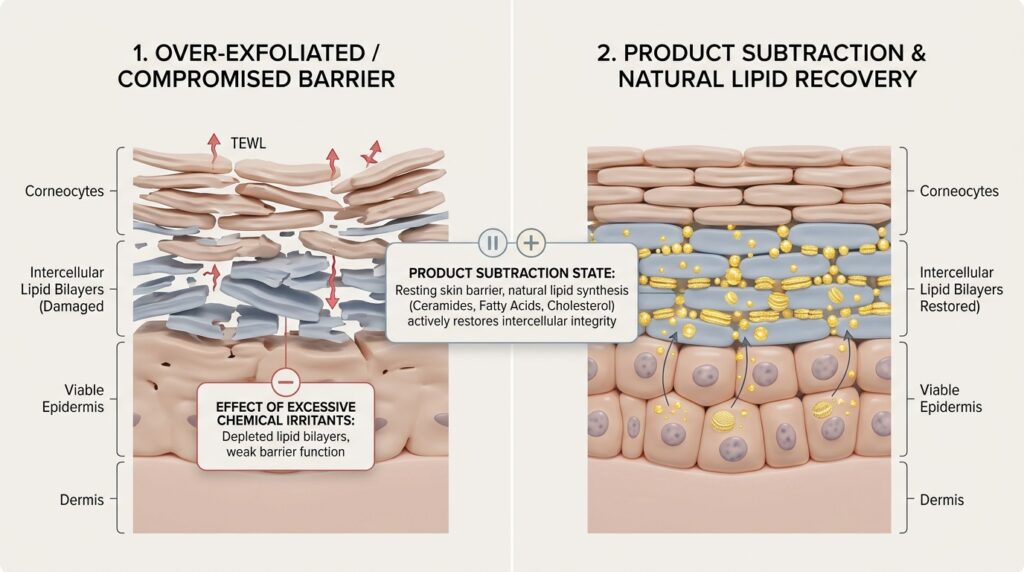
In healthy skin, dead corneocytes shed imperceptibly as fresh cells rise to the top. When chemical exfoliants or retinoids are used too frequently, they dissolve the protein bonds (corneodesmosomes) faster than your basal layer can produce replacement cells.
This creates widespread gaps in the stratum corneum lipid bilayers. Water evaporates outward through elevated Transepidermal Water Loss (TEWL), while sensory C-nerve fibers become exposed to the air. Once the acute 72-hour reset is complete, transitioning into a sustainable simple daily skincare routine will protect your barrier against recurring over-exfoliation.
The 72-Hour Reset Timeline (Hours 0 to 72)
Dermatologists emphasize that the first three days following acute over-exfoliation dictate whether your skin calms down quickly or develops chronic contact dermatitis. Here is your hour-by-hour action plan:
| Recovery Phase | What Your Skin Feels | Action Plan |
|---|---|---|
| Hours 0–24 (Acute Freeze) | Intense heat, sharp stinging from water, tight red sheen | Stop all actives immediately; rinse only with lukewarm water; apply a 5% Panthenol recovery balm generously |
| Hours 24–48 (Lipid Sealing) | Stinging begins to subside; minor peeling and tightness appear | Cleanse with a non-foaming lotion wash; layer ceramide moisturizer under recovery balm; use mineral SPF outdoors |
| Hours 48–72 (Consolidation) | Redness softens; surface texture feels less raw and more supple | Maintain the 3-step gentle routine; do NOT reintroduce any acids or retinoids for at least 3 weeks |
If your skin experiences persistent stinging, intense burning, cracking, or severe irritation at any point, discontinue all active products immediately and consult a board-certified dermatologist.
The Editor’s Choice: The Ultimate Recovery Balm
During an emergency reset, choosing a clinically proven post-procedure balm containing high concentrations of Vitamin B5 accelerates epidermal repair while protecting open micro-fissures from bacterial entry.[2]
OUR EDIT
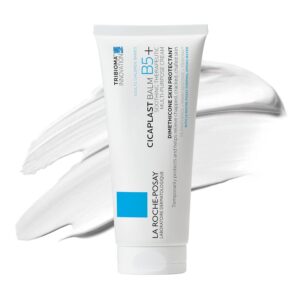
La Roche-Posay Cicaplast Balm B5+
A multi-purpose soothing balm formulated with 5% Panthenol (Vitamin B5), Madecassoside, Tribioma postbiotic complex, shea butter, and a zinc-manganese-copper purifying mineral complex. It forms a breathable, insulating shield over raw, burning skin, providing immediate relief and speeding up barrier repair.
Critical Mistakes to Avoid During the Reset
When recovering from over-exfoliation, a single misstep can reset your healing progress back to zero. Be sure to avoid these four common pitfalls:
- Peeling or rubbing dry flakes: Surface flaking is your skin’s way of shedding injured cells. Picking at flakes pulls off living tissue underneath, creating permanent redness and scarring.
- Applying chemical sunscreens: Organic UV filters convert light into thermal heat, which triggers sharp burning on raw skin.[4] Use pure mineral zinc oxide only.
- Layering essential oils or fragranced sheet masks: Perfumed formulas and natural plant extracts (like tea tree or citrus) contain volatile allergens that cause severe contact dermatitis on cracked skin.
- Rushing back to active serums too early: Feeling relief after 72 hours does not mean your stratum corneum has rebuilt its full lipid density.[3] Wait at least three weeks before even considering a mild active.
A Quick Self-Check
Is Your Barrier Ready for Actives?
- NOT Ready: Water or plain moisturizer still causes mild tingling; face feels pulled tight by midday; red patches remain visible.
- Ready for Gradual Reintroduction: Skin has felt completely calm and comfortable for 21 consecutive days; basic products absorb smoothly without heat; surface texture is soft and supple.
Frequently Asked Questions
Can I wear makeup during the 72-hour reset?
It is strongly advised to skip foundation and concealers for the full 72 hours. Makeup removal requires cleansers and cotton friction that physically disrupt healing corneocytes. If you must go out, rely on a soothing tinted mineral sunscreen.
What should I do if my skin still stings after 72 hours?
If stinging and heat persist past three full days of minimalist care, your barrier damage is more severe. Extend the gentle recovery routine for a full 14 days, stick strictly to lukewarm distilled water and plain lipid balms, and consult a board-certified dermatologist if you suspect an allergic contact reaction.
Medical & Wellness Disclaimer: The information provided on Hinubix is for general educational and informational purposes only and does not constitute medical, psychological, or dermatological advice, diagnosis, or treatment. If you are navigating persistent sleep issues, chronic stress, or unexplained health or skin concerns, please consult a qualified healthcare professional or board-certified specialist for personalized guidance.”
A Note From Nubix ☁️
“Wash away the day, put on your comfiest pajamas, and have the sweetest dreams. Tomorrow will be kind to you.”
Medical References
This article was developed and fact-checked based on peer-reviewed dermatological research from the following clinical sources:
- The Journal of Clinical and Aesthetic Dermatology. Del Rosso, J. Q., & Levin, J. (2011). “The clinical relevance of maintaining the functional integrity of the stratum corneum in both healthy and disease-affected skin.” Available at PubMed Central ↩
- Journal of Cosmetic Science. Camargo, F. B., Gaspar, L. R., & Maia Campos, P. M. (2011). “Skin moisturizing effects of panthenol-based formulations.” Available at PubMed ↩
- Dermatologic Therapy. Rawlings, A. V., & Harding, C. R. (2004). “Moisturization and skin barrier function.” Available at PubMed ↩
- Photodermatology, Photoimmunology & Photomedicine. Krutmann, J., et al. (2017). “Daily photoprotection to prevent photoaging.” Available at PubMed ↩