Skincare • Barrier Health • Recovery Ritual
The Art of Slugging: How to Lock In Moisture Without Clogging Pores
Affiliate Disclosure: This post contains affiliate links. If you make a purchase through these links, we may earn a small commission at no additional cost to you. As an Amazon Associate, we earn from qualifying purchases. We only recommend products we believe may provide value to our readers. Read our full Affiliate Disclosure here.
It started with a viral social media video promising an instant glass-skin glow, but after a few nights of coating your face in thick ointment, you woke up to congested pores, sudden breakouts, and deep frustration. Slugging has taken over beauty feeds as a glossy trend, but when practiced incorrectly, this intense overnight occlusion can easily trap heat and bacteria instead of healing your skin.
At Hinubix, we see slugging not as a daily mandate, but as an effective recovery step for tired, irritated skin. If your face is actively stinging or peeling from over-exfoliation, pairing targeted micro-slugging with our 5 simple steps to repair your damaged skin barrier gives your stratum corneum immediate relief without triggering unwanted congestion.
The Bottom Line
Key Takeaway: Pure petrolatum molecules are too large to physically penetrate or clog pores, reducing transepidermal water loss by over 98%. However, because occlusives trap whatever sits beneath them, never slug over active acids or retinoids—only apply a pea-sized glaze over clean skin and gentle hydrating moisturizers.
In This Feature
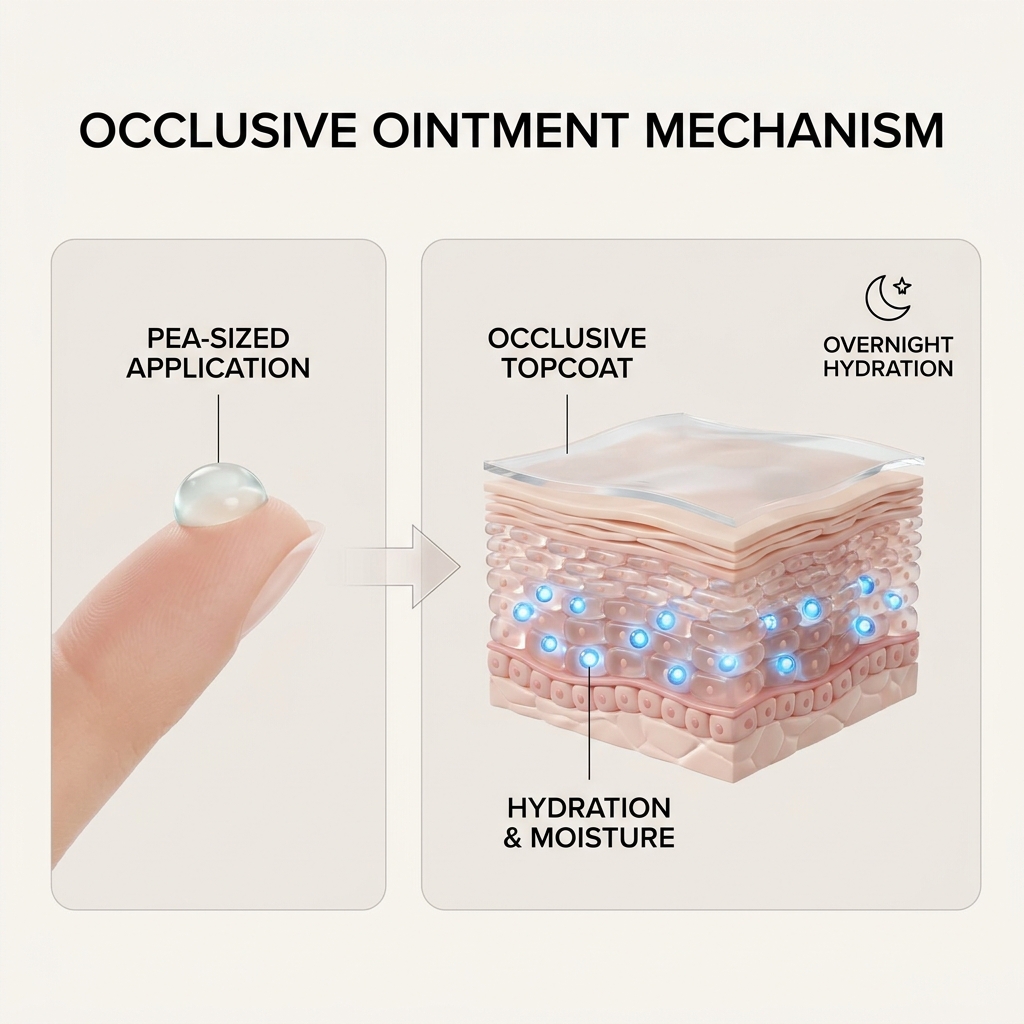
The Science of Occlusion: How Slugging Protects Skin
In dermatological science, moisturizers fall into three functional categories: humectants that bind water, emollients that smooth cellular gaps, and occlusives that form a physical seal against evaporation.[2]
Classic research published in the Journal of the American Academy of Dermatology demonstrated that high-grade petrolatum is the single most effective occlusive agent known, reducing Transepidermal Water Loss (TEWL) by more than 98%. By locking moisture into the stratum corneum overnight, slugging creates an ideal environment for natural lipid enzymes to rebuild micro-cracks rapidly.
Who Benefits Most (and Who Should Skip It)
While slugging is deeply comforting for dry and sensitized complexions, it is not universally appropriate for every skin condition. Matching the technique to your skin’s current state ensures you reap the barrier-repair benefits without congestion:
| Skin Condition | Slugging Recommendation | How to Apply |
|---|---|---|
| Dry or Flaking Skin | Highly Recommended (2–3 nights weekly) | Thin layer applied across the entire face over a lipid cream |
| Over-Exfoliated / Stinging | Recommended for acute recovery | Nightly for 3–5 days until stinging completely subsides |
| Combination Skin | Targeted Micro-Slugging only | Apply solely to dry cheeks and under-eyes; skip the oily T-zone |
| Active Cystic Acne | Not Recommended | Avoid full-face occlusion; heavy sealing can trap bacteria in active lesions |
The Step-by-Step Slugging Ritual
To prevent breakouts and achieve a clean, dewy recovery, the application sequence must be precise. Slugging is not meant to replace your regular products; once your barrier stabilizes, integrating it into a balanced simple daily skincare routine keeps your skin resilient through dry weather.
- 1. Cleanse Thoroughly: Spend 60 seconds washing with a gentle, non-foaming cleanser to remove all makeup, pollution, and sunscreen residue before sealing your skin.
- 2. Hydrate and Moisturize: Apply your water-based hydrating serum on damp skin, immediately followed by a nourishing cream containing Ceramides and fatty acids.[3]
- 3. Apply a Pea-Sized Occlusive Glaze: Warm a small pea-sized amount of healing ointment between your fingertips and gently press it over your face. A thin, breathable glaze is all that is required.
OUR EDIT
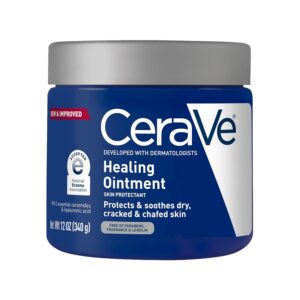
CeraVe Healing Ointment
Unlike pure petroleum jelly, this dermatological ointment combines pharmaceutical-grade petrolatum with hyaluronic acid and three essential ceramides (1, 3, 6-II). It creates a breathable, non-greasy protective seal that prevents overnight moisture evaporation without clogging pores.
A Quick Self-Check
Slugging Dos and Don’ts
- DO slug over pure hydrators: Hyaluronic acid, glycerin, ceramides, and panthenol thrive under occlusion.
- DO NOT slug over active acids or retinoids: Occlusion intensifies ingredient penetration dramatically; slugging over retinoids or AHAs will frequently cause chemical burning.
- DO sleep on a fresh pillowcase: Change your pillowcase frequently when practicing overnight slugging to maintain optimal surface cleanliness.
Frequently Asked Questions
How many nights a week should you slug?
For general maintenance during dry winter months, one to two nights per week is plenty. If your barrier is severely damaged and actively stinging from water, you can slug nightly for three to five days as an emergency reset until surface flaking calms down.
Can I slug with facial oils instead of petrolatum?
Plant oils (like squalane or jojoba) provide excellent emollience and soften the skin, but they only reduce water loss by about 20% to 30%. True slugging relies on semi-solid hydrocarbon ointments that create an impermeable barrier to halt water evaporation almost entirely.
How do you wash off the ointment in the morning?
By morning, most of the product will have absorbed or gently rubbed off. Rinsing thoroughly with lukewarm water and a soft washcloth, or using a gentle non-foaming cleansing lotion, easily removes any lingering surface film before you apply daytime sunscreen.
Medical & Wellness Disclaimer: The information provided on Hinubix is for general educational and informational purposes only and does not constitute medical, psychological, or dermatological advice, diagnosis, or treatment. If you are navigating persistent sleep issues, chronic stress, or unexplained health or skin concerns, please consult a qualified healthcare professional or board-certified specialist for personalized guidance.”
A Note From Nubix ☁️
“Wrap yourself in a warm oversized sweater and sip something sweet. Sending you a little pocket of sunshine today!”
Medical References
This article was developed and fact-checked based on peer-reviewed dermatological research from the following clinical sources:
- Journal of the American Academy of Dermatology. Ghadially, R., Halkier-Sorensen, L., & Elias, P. M. (1992). “Effects of petrolatum on experimentally induced barrier disruption.” Available at PubMed ↩
- Dermatologic Therapy. Rawlings, A. V., & Harding, C. R. (2004). “Moisturization and skin barrier function.” Available at PubMed ↩
- Journal of Cosmetic Dermatology. Draelos, Z. D. (2018). “The science behind skin care: Moisturizers.” Available at PubMed ↩