Skincare • Skin Health • Diagnostic Guide
Skin Purging vs. Damaged Barrier: How to Tell the Difference
You recently introduced a new retinol serum or exfoliating acid, eager to cross the threshold into clearer, smoother skin. But a week in, your face erupts in a confusing cluster of red bumps, flaking, and irritation. Now you are left in a state of anxious limbo: is your skin going through a necessary, temporary purge—or are you actively ruining your face by tearing your moisture barrier apart?
Mistaking barrier damage for a harmless purge is one of the most common reasons people push through chronic irritation until their skin becomes raw and reactive. Once you determine what your skin is experiencing, anchoring your regimen in a simple daily skincare routine ensures your moisture barrier stays protected from ingredient overload.
The Bottom Line
Key Takeaway: Skin purging only happens with ingredients that increase cell turnover (retinoids, chemical acids), appearing strictly in areas where you typically break out and resolving without burning. Barrier damage causes widespread redness, raw peeling, and sharp stinging upon applying water or basic moisturizers.
In This Feature
What Is True Skin Purging?
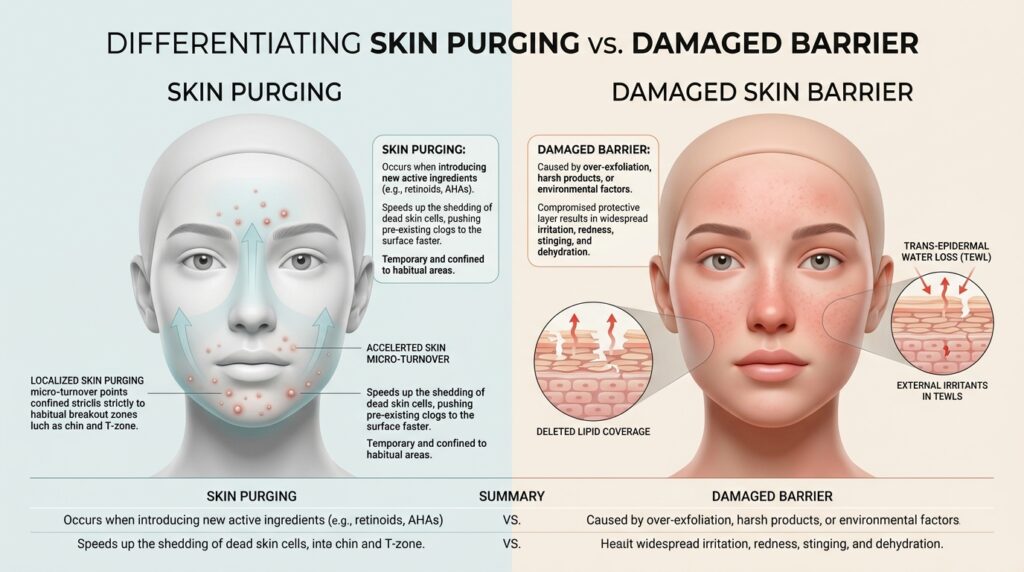
In dermatological science, skin purging refers to a temporary acceleration of cellular turnover.[2] When you introduce an active formula that speeds up the rate at which skin cells shed, microscopic clogs (microcomedones) that were already forming deep within your hair follicles are pushed to the surface much faster than normal.
Because these blemishes were already developing beneath the surface, purging occurs strictly in your habitual breakout zones—such as your chin, forehead, or jawline. Blemishes from purging appear quickly and resolve faster than standard pimples, usually disappearing within a few days without widespread stinging or raw burning.
The Telltale Signs of a Damaged Barrier
A damaged barrier is not a necessary stage of clearer skin; it is an injury to the stratum corneum’s intercellular lipid matrix.[3] When the lipid mortar between your skin cells is depleted, transepidermal water loss surges, leaving sensory nerve fibers exposed to ambient air and product ingredients.
If your symptoms point to a compromised barrier, pausing all active formulas immediately and following a 72-hour barrier reset protocol helps stop the stinging and initiates rapid lipid repair before chronic inflammation sets in.
Which Ingredients Can (and Cannot) Cause a Purge
One of the most helpful diagnostic rules is checking the active ingredient on your bottle. Only specific classes of active ingredients are biochemically capable of causing a true purge:
- Ingredients that CAN cause purging: Retinoids (tretinoin, adapalene, retinol), Alpha Hydroxy Acids (glycolic, lactic, mandelic), Beta Hydroxy Acids (salicylic acid), and pure L-ascorbic acid (Vitamin C).
- Ingredients that CANNOT cause purging: Hyaluronic acid, niacinamide, ceramides, squalane, centella asiatica, panthenol, and sunscreens. If you break out from a pure hydrating serum or moisturizer, it is a negative reaction or pore blockage, not a purge.
Side-by-Side Comparison: Purging vs. Damage
Here is how to evaluate your skin’s reaction across five key clinical markers:
| Diagnostic Marker | Skin Purging | Damaged Skin Barrier |
|---|---|---|
| Blemish Location | Strictly in your usual breakout areas (chin, T-zone) | New, unusual areas (dry cheeks, around mouth, neck) |
| Skin Sensation | Comfortable; basic moisturizers do not sting | Burning, raw tightness, water and gentle creams sting |
| Surface Texture | Normal surrounding texture; individual pimples heal fast | Rough, sandpapery flaking combined with tight surface shine |
| Duration | 4 to 6 weeks total (one full turnover cycle) | Persists or worsens until active products are stopped |
| Correct Action | Continue active with patience; moisturize well | Stop all actives immediately; replenish with ceramides |
A Quick Self-Check
The 5-Day Diagnostic Test
- If you cannot tell: Pause your active treatment for five full days while using only a gentle cleanser and plain barrier cream.
- If stinging and redness rapidly subside: Your barrier was damaged. Stay on the gentle routine for another three weeks before considering reintroduction.
- If your skin feels completely calm: You were likely experiencing a normal purge and can slowly reintroduce the active with proper buffering.
- If your skin experiences persistent stinging, intense burning, cracking, or severe irritation at any point, discontinue all active products immediately and consult a board-certified dermatologist.
Frequently Asked Questions
How long should normal skin purging last?
A normal purge aligns with your skin’s epidermal turnover cycle, which averages four to six weeks in healthy adults. If widespread breakouts, redness, or flaking continue past the six-week mark, you are dealing with chronic barrier irritation or product intolerance rather than a purge.
Can barrier damage trigger new acne breakouts?
Yes. When the stratum corneum lipid matrix is stripped, surface moisture evaporates rapidly, prompting your sebaceous glands to overproduce oil to compensate. Combined with micro-cracks that allow airborne bacteria to penetrate easily, this frequently triggers clusters of inflammatory blemishes.
Medical & Wellness Disclaimer: The information provided on Hinubix is for general educational and informational purposes only and does not constitute medical, psychological, or dermatological advice, diagnosis, or treatment. If you are navigating persistent sleep issues, chronic stress, or unexplained health or skin concerns, please consult a qualified healthcare professional or board-certified specialist for personalized guidance.”
A Note From Nubix ☁️
“Step into the morning light, stretch gently, and leave a little room for wonder today. You’ve got this!”
Medical References
This article was developed and fact-checked based on peer-reviewed dermatological research from the following clinical sources:
- The Journal of Clinical and Aesthetic Dermatology. Del Rosso, J. Q., & Levin, J. (2011). “The clinical relevance of maintaining the functional integrity of the stratum corneum in both healthy and disease-affected skin.” Available at PubMed Central ↩
- The Journal of Investigative Dermatology. Kligman, A. M. (1974). “An overview of acne.” Available at PubMed ↩
- Dermatologic Therapy. Rawlings, A. V., & Harding, C. R. (2004). “Moisturization and skin barrier function.” Available at PubMed ↩