Skincare • Barrier Health • Ingredient Guide
Niacinamide for Sensitive Skin: Safe Percentages vs. Irritation Risks
Affiliate Disclosure: This post contains affiliate links. If you make a purchase through these links, we may earn a small commission at no additional cost to you. As an Amazon Associate, we earn from qualifying purchases. We only recommend products we believe may provide value to our readers. Read our full Affiliate Disclosure here.
Niacinamide has become one of the most widely recommended active ingredients in modern skincare, celebrated for calming redness, minimizing enlarged pores, and reinforcing the skin barrier. Yet for many women with sensitive or reactive skin, trying a popular high-percentage serum ends not in a dewy glow, but in sudden flushing, heat, and tiny red bumps.
At Hinubix, we believe effective skincare is about finding the sweet spot where ingredients support your biology without overwhelming it. When choosing active ingredients, anchoring them within a balanced simple daily skincare routine ensures your moisture barrier stays protected from ingredient overload.
The Bottom Line
Key Takeaway: Clinical dermatology studies prove that 2% to 5% niacinamide delivers maximum barrier repair, ceramide stimulation, and tone evening with minimal irritation risk. Formulations exceeding 10% do not offer superior efficacy and frequently trigger flushing and contact dermatitis on sensitive skin.
In This Feature
The Concentration Trap: 2–5% vs. 10%+ Formulations
In the competitive world of skincare marketing, brands often treat ingredient percentages as a strength competition. However, peer-reviewed clinical literature in the Journal of Cosmetic Dermatology establishes that 2% to 5% is the exact therapeutic window where niacinamide stimulates natural ceramide synthesis and calms cutaneous redness without triggering vasodilation.
When concentrations jump to 10% or 20%, unbuffered molecules can partially convert into residual nicotinic acid on the skin surface. This sudden surge dilates surface blood vessels, causing sharp stinging and contact dermatitis. If high-percentage serums have caused sudden flushing or burning, switching to an emergency routine for over-exfoliated skin will calm your reactive barrier within 72 hours.
| Niacinamide Percentage | Clinical Effects | Irritation Risk |
|---|---|---|
| 2% to 3% | Increases ceramide production, reduces trans-epidermal water loss | Exceptionally low; ideal for sensitive skin |
| 4% to 5% | Evens skin tone, regulates excess sebum, softens fine lines | Low; universally tolerated by most skin types |
| 10% to 20% | Aggressive oil control, potential pore astringency | High; frequent cause of redness and stinging |
How Niacinamide Rebuilds Intercellular Lipids
Niacinamide (Vitamin B3) is a water-soluble coenzyme precursor that powers essential cellular metabolic pathways in the epidermis.[2] Unlike topical plant oils that simply coat the surface, niacinamide signals your keratinocytes to ramp up their internal synthesis of ceramides, glucosylceramides, and free fatty acids.
Additionally, studies in the Journal of Cosmetic and Laser Therapy show that low-dose niacinamide balances facial sebum excretion rates.[3] This makes it an ideal ingredient for combination skin that feels simultaneously tight and shiny.
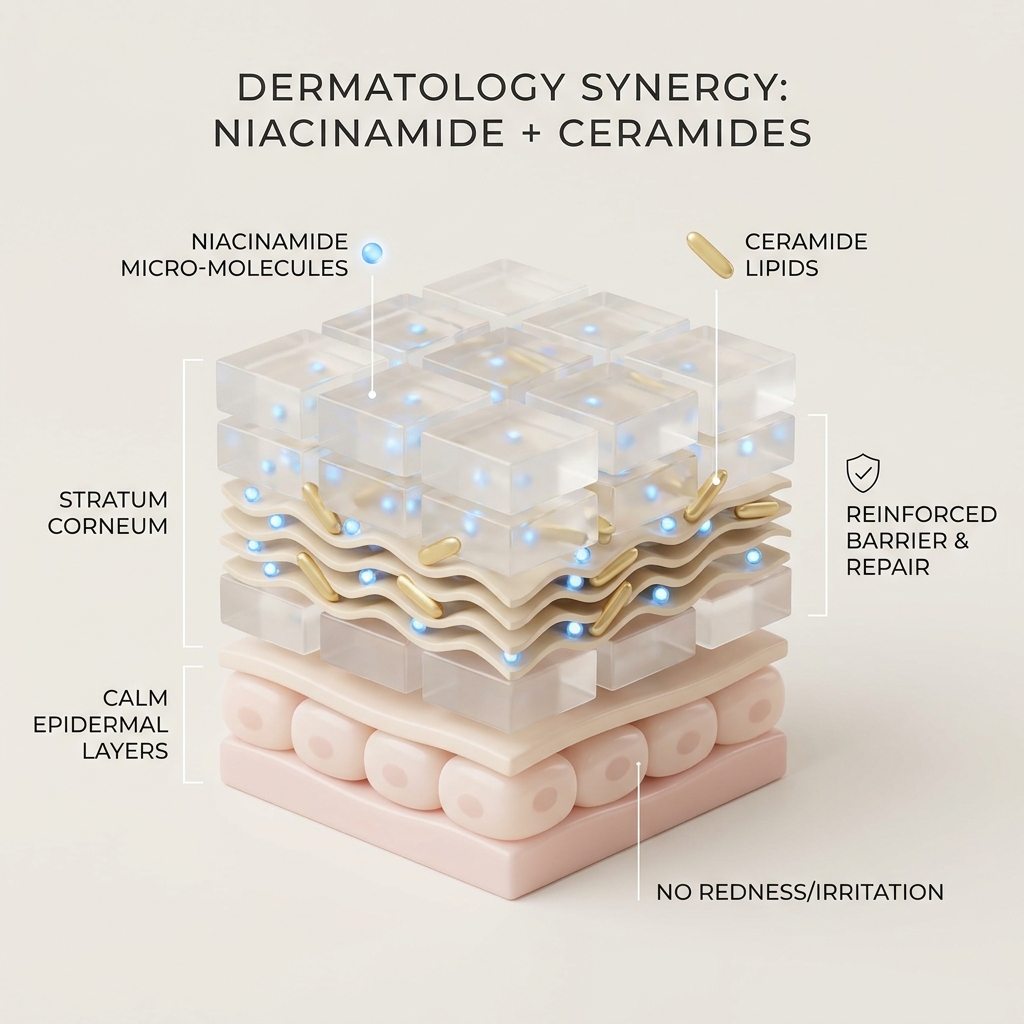
The Editor’s Choice: Safe Everyday Barrier Support
Rather than applying a standalone high-potency serum, the gentlest way to introduce niacinamide is through a well-buffered barrier cream where the vitamin is balanced by hydrating lipids and soothing thermal water.
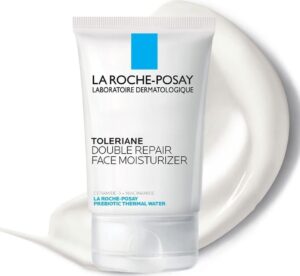
OUR EDIT
La Roche-Posay Toleriane Double Repair Face Moisturizer
Formulated with a gentle ~4% concentration of niacinamide alongside Ceramide-3, glycerin, and prebiotic thermal spring water. It provides 48-hour barrier hydration without oiliness, heavy waxes, or synthetic fragrance.
A Quick Self-Check
Is Niacinamide Working or Irritating?
- Working Properly: Redness gradually fades over 2 to 3 weeks; T-zone oiliness becomes balanced; skin feels comfortable and hydrated.
- Irritation Response: Skin feels warm and burns within minutes of application; clusters of tiny, itchy red bumps appear across cheeks.
- Action Step: If you experience the irritation response, pause the formula immediately. Switch to a 2% to 4% concentration buffered in a plain barrier cream.
Frequently Asked Questions
Can niacinamide cause true skin purging?
No. True skin purging only occurs with ingredients that increase cellular turnover, such as retinoids and chemical exfoliants (AHAs/BHAs). If you develop sudden breakouts or red bumps from a niacinamide serum, it is a reaction to high concentration or formula intolerance, not a purge.
Can low-percentage niacinamide be used with vitamin C or retinol?
Yes. When formulated at gentle 2% to 4% concentrations, niacinamide pairs exceptionally well with retinol and vitamin C. Its barrier-reinforcing and anti-inflammatory properties help buffer the skin against the potential dryness of retinoids.
Medical & Wellness Disclaimer: The information provided on Hinubix is for general educational and informational purposes only and does not constitute medical, psychological, or dermatological advice, diagnosis, or treatment. If you are navigating persistent sleep issues, chronic stress, or unexplained health or skin concerns, please consult a qualified healthcare professional or board-certified specialist for personalized guidance.”
A Note From Nubix ☁️
“Don’t forget to celebrate the tiny joys today—a fresh breeze, a cozy cup of coffee, or simply a moment to pause.”
Medical References
This article was developed and fact-checked based on peer-reviewed dermatological research from the following clinical sources:
- Journal of Cosmetic Dermatology. Gehring, W. (2004). “Nicotinic acid/niacinamide and the skin.” Available at PubMed ↩
- Dermatologic Surgery. Bissett, D. L., Oblong, J. E., & Berge, C. A. (2005). “Niacinamide: A B vitamin that improves aging facial skin appearance.” Available at PubMed ↩
- Journal of Cosmetic and Laser Therapy. Draelos, Z. D., Matsubara, A., & Smiles, K. (2006). “The effect of 2% niacinamide on facial sebum production.” Available at PubMed ↩