Skincare • Barrier Health • Foundation Guide
How to Build a Simple Skincare Routine
Affiliate Disclosure: This post contains affiliate links. If you make a purchase through these links, we may earn a small commission at no additional cost to you. As an Amazon Associate, we earn from qualifying purchases. We only recommend products we believe may provide value to our readers. Read our full Affiliate Disclosure here.
Over the past decade, the beauty industry convinced millions of women that healthy skin requires an elaborate ten-step vanity. Yet dermatologists are seeing more reactive, sensitized skin than ever before—often triggered by layering too many active serums on an exhausted moisture barrier.[1]
When people experience sudden redness or tingling, they often assume they need to purchase another corrective product. In reality, these stinging sensations are frequently early signs of barrier fatigue caused by chronic over-manipulation. At Hinubix, we advocate for a Barrier-First philosophy: building a simple skincare routine centered on restoring your protective lipid matrix is the only way to achieve truly resilient, glowing skin.
The Bottom Line
Key Takeaway: A sustainable simple skincare routine requires only three purposeful steps: Cleanse (with a pH-balanced, non-stripping wash), Replenish (with bio-identical physiological lipids), and Protect (with daily mineral sunscreen). Maintain this sequence for four weeks to allow your natural lipid matrix to stabilize.
In This Feature
Why Every Routine Must Start with Barrier Health
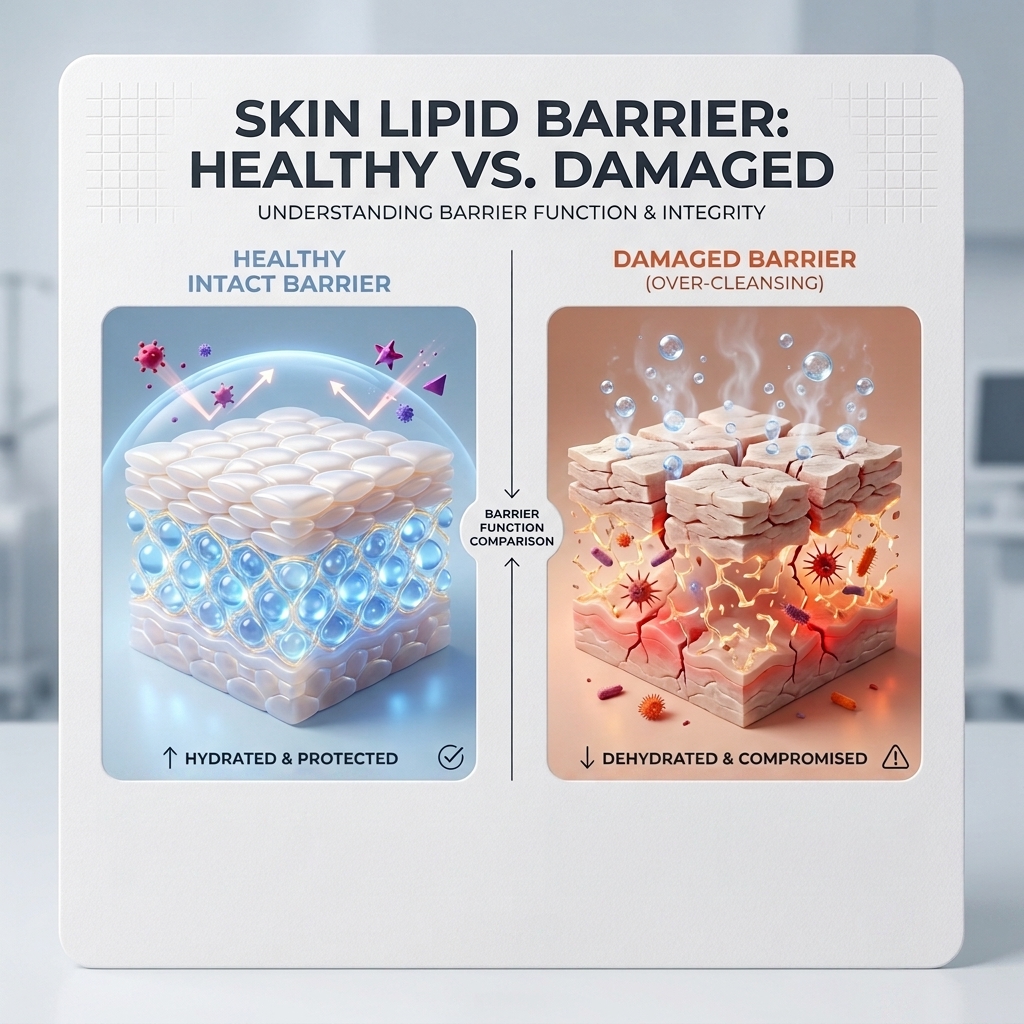
To understand why layering too many products backfires, look to the architecture of the stratum corneum—the outermost millimeter of your skin.[2] Dermatologists traditionally explain this using Dr. Peter Elias’s classic “brick and mortar” model: corneocytes (mature cells) are the bricks, while intercellular lipids (ceramides, cholesterol, and free fatty acids) form the waterproof mortar.
When aggressive foaming cleansers or multiple exfoliating toners strip these lipids, microscopic fissures open between the cells. This leads to accelerated Transepidermal Water Loss (TEWL) and exposes sensory nerve endings directly to external air. If your skin is actively stinging, pausing all strong treatments and following a step-by-step damaged barrier repair protocol is the fastest way back to equilibrium.[1]
The Essential Simple Skincare Routine: A 3-Step Framework
A resilient barrier does not require an overwhelming shelf. By focusing on three physiologically grounded steps, you provide your skin with everything it needs to defend itself by day and repair by night.
Step 1: Non-Stripping Cleansing
Healthy skin maintains a naturally acidic pH between 4.7 and 5.75, which sustains beneficial microflora and activates enzymes that synthesize ceramides.[2] Alkaline bar soaps and harsh sulfates disrupt this acid mantle for hours after washing. In the morning, a lukewarm water rinse is often sufficient; in the evening, use a mild, fragrance-free lotion cleanser.
OUR EDIT
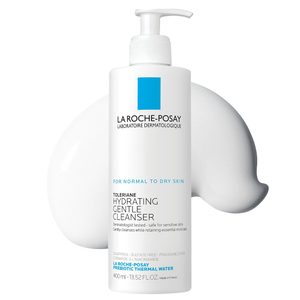
La Roche-Posay Toleriane Hydrating Gentle Cleanser
A minimalist, wipe-off or rinse-off cleansing fluid formulated with thermal spring water and glycerin. It effectively dissolves impurities and light makeup without disrupting the delicate acid mantle or leaving skin feeling tight.
Step 2: Physiological Lipid Replenishment
Applying water-binding humectants like hyaluronic acid on bare skin is not enough; without emollient and occlusive lipids to trap that water, it evaporates into dry room air. True restoration requires choosing the right lipid ratio for your skin, incorporating Ceramides, Cholesterol, and Fatty Acids that mimic the natural 3:1:1 physiological composition of the epidermis.[2]
OUR EDIT
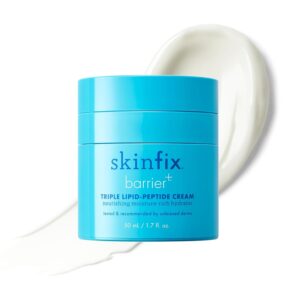
Skinfix Barrier+ Triple Lipid-Peptide Cream
Formulated with a clinical ratio of active lipids—including skin-similar ceramides, plant sterols, and free fatty acids—combined with firming peptides to replenish the depleted intercellular matrix without clogging pores.
Budget Alternative: For an accessible drugstore alternative, consider CeraVe Moisturizing Cream with 3 essential ceramides.
Step 3: Daytime Mineral Defense
Ultraviolet radiation is one of the most potent triggers of oxidative stress in the epidermis, directly breaking down structural proteins and depleting natural lipids.[3] For sensitized skin, choosing gentle, zero-sting mineral sunscreens formulated with non-nano Zinc Oxide provides broad-spectrum protection while sitting calmly on the surface without causing heat or stinging.
OUR EDIT
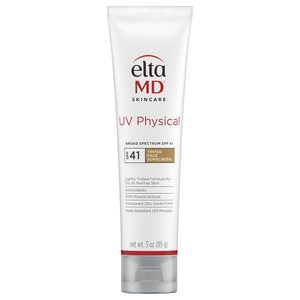
EltaMD UV Physical Broad-Spectrum SPF 41
An oil-free, lightly tinted mineral sunscreen utilizing zinc oxide and titanium dioxide. It provides water-resistant photoprotection with antioxidant support, calming post-procedure and sensitive complexions seamlessly.
Morning vs. Night: The Circadian Rhythm of Skincare
Skin cells follow an internal circadian biological clock that alters their physiological needs across a 24-hour cycle.[4] Understanding the circadian differences between morning and night skincare helps you allocate your time and formulations for maximum benefit.
| Time of Day | Biological Focus | Application Sequence |
|---|---|---|
| Morning | Environmental defense against UV, blue light, and urban particulate matter | Water rinse/gentle wash ➔ Light hydrating moisturizer ➔ Broad-spectrum SPF |
| Evening | Cellular repair, microbiome recovery, and lipid matrix restoration | Gentle 60-second cleanse ➔ Barrier-support cream (richer texture) |
When applying products, always adhere to the correct skincare layering order: move systematically from thin, water-based textures to dense, lipid-rich creams. Applying a thick balm before a light serum prevents the serum from penetrating the stratum corneum and often causes pilling under sunscreen.
How to Safely Introduce Active Ingredients
The most common mistake beginners make is introducing exfoliating acids, retinoids, and vitamin C simultaneously. A reliable guideline is health before performance: maintain your core 3-step routine for at least four weeks without adding any new products until your skin feels comfortable every day.[1]
When you do choose to introduce a targeted treatment, add only one formula at a time. It is crucial to understand the difference between normal cellular renewal and inflammation by distinguishing skin purging from a damaged barrier: transient purging occurs in areas where you typically break out, whereas barrier breakdown produces stinging, redness, and flaking across the entire face.
Four Common Habits That Weaken the Barrier
Even well-intentioned habits can unknowingly erode your protective lipid layer. Keeping an eye out for these four common practices will save you months of barrier recovery:
- 1. Over-reliance on clay masks and physical scrubs: Clay and abrasive particles draw out vital intercellular lipids alongside surface sebum, creating micro-fissures in the stratum corneum.
- 2. Washing with steaming hot water: High water temperatures melt protective surface lipids much like washing greasy dishes, leaving your face tight and stripped.
- 3. Stacking multiple watery toners and essences: Saturating the skin with excessive water without adequate emollient sealing can paradoxically increase trans-epidermal evaporation.
- 4. Skipping sunscreen on overcast or indoor days: Up to 80% of UVA rays penetrate cloud cover and window glass year-round, generating chronic low-grade oxidative stress.[3]
Frequently Asked Questions
How long does a simple skincare routine take to show visible improvements?
Surface comfort and decreased tightness from a simple skincare routine often occur within three to seven days. However, noticeable improvements in skin resilience, barrier density, and smoothness naturally follow your epidermal turnover cycle, which averages between 28 and 40 days in healthy adults.
Do oily or acne-prone skin types really need a lipid moisturizer?
Yes. Oily skin produces an abundance of sebum (primarily squalene and wax esters), but it is often deficient in essential barrier lipids like ceramides. Skipping moisturizer can cause surface dehydration, prompting sebaceous glands to overcompensate with even more surface oil.
When should I consider adding eye creams or targeted essences?
Only after your primary 3-step routine has maintained your skin in a calm, non-reactive state for at least four to six weeks. Most facial barrier moisturizers can be safely applied around the orbital bone without requiring a dedicated eye cream unless specific dark circles or puffiness need specialized actives.
A Note From Nubix ☁️
“Healthy skin doesn’t ask for a dozen steps or perfection—just a little kindness, daily consistency, and space to breathe.”
Medical & Wellness Disclaimer: The information provided on Hinubix is for general educational and informational purposes only and does not constitute medical, psychological, or dermatological advice, diagnosis, or treatment. If you are navigating persistent sleep issues, chronic stress, or unexplained health or skin concerns, please consult a qualified healthcare professional or board-certified specialist for personalized guidance.”
Medical References
This article was developed and fact-checked based on peer-reviewed dermatological research from the following clinical sources:
- The Journal of Clinical and Aesthetic Dermatology. Del Rosso, J. Q., & Levin, J. (2011). “The clinical relevance of maintaining the functional integrity of the stratum corneum in both healthy and disease-affected skin.” Available at PubMed Central ↩
- Dermatologic Therapy. Rawlings, A. V., & Harding, C. R. (2004). “Moisturization and skin barrier function.” Available at PubMed (PMID: 14728698) ↩
- Photodermatology, Photoimmunology & Photomedicine. Krutmann, J., et al. (2021). “Daily photoprotection to prevent photoaging.” Available at PubMed (PMID: 33896049) ↩
- International Journal of Molecular Sciences. Matsui, M. S., et al. (2016). “Biological Rhythms in the Skin.” Available at PubMed (PMID: 27231897) ↩