Skincare • Barrier Health • Ingredient Comparison
Panthenol (B5) vs. Centella Asiatica: Which Soothes Redness Faster?
Affiliate Disclosure: This post contains affiliate links. If you make a purchase through these links, we may earn a small commission at no additional cost to you. As an Amazon Associate, we earn from qualifying purchases. We only recommend products we believe may provide value to our readers. Read our full Affiliate Disclosure here.
When your cheeks suddenly flush red from temperature changes, over-exfoliation, or a reaction to a new product, you want rapid, visible relief. In modern skincare, two soothing powerhouses consistently lead the conversation: Panthenol (Vitamin B5) and Centella Asiatica (Cica).
While both ingredients are celebrated for calming irritated skin, they work through entirely different biological pathways. If redness is accompanied by raw stinging or flaking, combining these soothing actives with our 5 simple steps to repair your damaged skin barrier accelerates epidermal recovery and stops ongoing moisture loss.
The Bottom Line
Key Takeaway: Centella Asiatica calms vascular flushing, inflammatory heat, and acne irritation faster by suppressing inflammatory cytokines; Panthenol (B5) heals stinging, tightness, and barrier peeling faster by stimulating lipid synthesis and drawing deep water into damaged cells.
In This Feature
- Why Skin Flushes: Inflammation vs. Barrier Breakdown
- Panthenol (B5): The Moisture & Lipid Rebuilder
- Centella Asiatica: The Botanical Fire Extinguisher
- Which Soothes Redness Faster?
- The Editor’s Choice: Restorative Post-Treatment Relief
- A Quick Self-Check: Choosing Your Soothing Match
- Frequently Asked Questions
- Related Skincare Guides
Why Skin Flushes: Inflammation vs. Barrier Breakdown
Facial redness is not a single condition; it stems from two distinct biological mechanisms. The first is vascular inflammation, where surface capillaries dilate in response to heat, active acne, or rosacea triggers. The second is barrier-depletion redness, where missing intercellular lipids expose sensory nerves and allow moisture to evaporate unchecked.[2]
Understanding which type of redness you are experiencing helps you select the right ingredient. Once acute flushing settles, keeping your daily care aligned with a simple daily skincare routine maintains long-term barrier resilience.
Panthenol (B5): The Moisture & Lipid Rebuilder
Panthenol (D-Panthenol) is the provitamin form of Vitamin B5. Upon topical application, it readily penetrates into the stratum corneum and enzymatically converts into pantothenic acid—an essential component of Coenzyme A, which drives cellular lipid synthesis.
Clinical dermatology studies demonstrate that panthenol functions as both a powerful humectant and an epidermal repair accelerator. It stimulates fibroblasts, enhances stratum corneum hydration, and reduces Transepidermal Water Loss (TEWL), making it the premier choice when skin is stinging, peeling, or physically raw.[3]
Centella Asiatica: The Botanical Fire Extinguisher
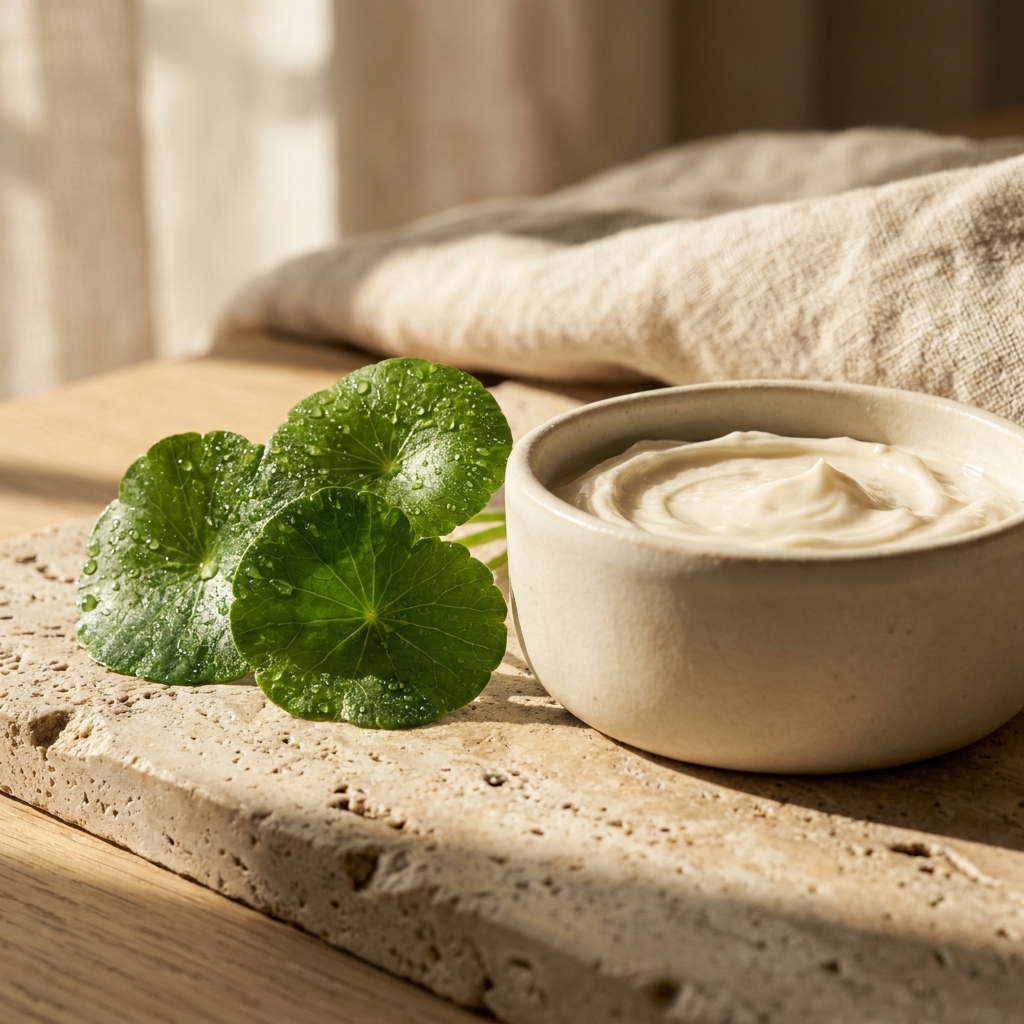
Centella Asiatica (commonly known as Cica or Tiger Grass) is a medicinal perennial herb native to wetlands in Asia. Its therapeutic potency comes from four active triterpenoid compounds: madecassoside, asiaticoside, madecassic acid, and asiatic acid.[2]
Research in Postepy Dermatologii i Alergologii shows that madecassoside directly inhibits pro-inflammatory cytokines (such as IL-1β and TNF-α) that dilate surface capillaries.[2] Centella acts rapidly to extinguish visible redness caused by post-acne erythema, sunburn, and environmental heat.
Which Soothes Redness Faster?
The speed of relief depends entirely on the underlying cause of your flushing:
| Redness Scenario | Faster Acting Ingredient | Why It Works |
|---|---|---|
| Over-Exfoliation & Stinging | Panthenol (B5) | Plugs micro-cracks, reduces TEWL, and insulates exposed sensory nerves |
| Acne Inflammation & PIE | Centella Asiatica | Downregulates localized cytokines and cools dilated surface capillaries |
| Post-Sun Heat & Flushing | Centella Asiatica | Provides immediate thermal cooling and antioxidant scavenging |
| Dry Winter Chapping | Panthenol (B5) | Deeply rehydrates corneocytes and stimulates natural ceramide synthesis |
The Editor’s Choice: Restorative Post-Treatment Relief
When facial redness is intense, combining soothing postbiotic repair with anti-bacterial copper and zinc creates an optimal physical shield that calms inflammation while accelerating tissue recovery.
OUR EDIT
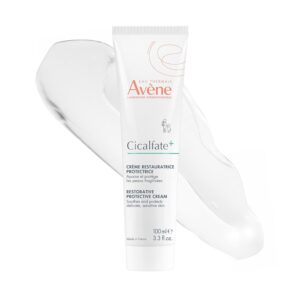
Avène Cicalfate+ Restorative Protective Cream
Formulated with patented postbiotic C+-Restore, a copper-zinc sulfate purifying complex, and high concentrations of Avène Thermal Spring Water. It creates a breathable, soothing barrier over raw, red, or compromised skin, reducing discomfort within 48 hours.
A Quick Self-Check
Choosing Your Soothing Match
- If your skin stings when applying moisturizer: Choose a Panthenol (5%) balm to rebuild lipid hydration.
- If your skin is red from hot weather or active blemishes: Choose a lightweight Centella Asiatica (Madecassoside) serum.
- If you are recovering from a chemical peel: Layer a centella essence underneath a panthenol and ceramide cream for comprehensive relief.
Frequently Asked Questions
Can Panthenol and Centella Asiatica be used together in the same routine?
Yes. Because their biological mechanisms are complementary, pairing a watery Centella Asiatica serum with a richer Panthenol cream provides dual-action relief—cooling surface cytokine inflammation while reinforcing the physical lipid barrier.
Can Panthenol cause clogged pores on oily skin?
Panthenol itself is completely non-comedogenic and water-soluble. However, heavy restorative creams designed for post-procedure care often contain rich waxes and mineral oils; if your skin is acne-prone, look for panthenol formulated in lightweight gel-emulsions rather than thick balms.
Medical & Wellness Disclaimer: The information provided on Hinubix is for general educational and informational purposes only and does not constitute medical, psychological, or dermatological advice, diagnosis, or treatment. If you are navigating persistent sleep issues, chronic stress, or unexplained health or skin concerns, please consult a qualified healthcare professional or board-certified specialist for personalized guidance.”
A Note From Nubix ☁️
“No rushing, no comparing. Just you, taking gentle care of yourself, one cozy evening at a time.”
Medical References
This article was developed and fact-checked based on peer-reviewed dermatological research from the following clinical sources:
- Journal of Cosmetic Science. Camargo, F. B., Gaspar, L. R., & Maia Campos, P. M. (2011). “Skin moisturizing effects of panthenol-based formulations.” Available at PubMed ↩
- Postepy Dermatologii i Alergologii. Bylka, W., Znajdek-Awiżeń, P., Studzińska-Sroka, E., & Brzezińska, M. (2013). “Centella asiatica in cosmetology.” Available at PubMed Central ↩
- American Journal of Clinical Dermatology. Ebner, F., Heller, A., Rippke, F., & Lunderstädt, R. (2002). “Topical use of dexpanthenol in skin disorders.” Available at PubMed ↩